
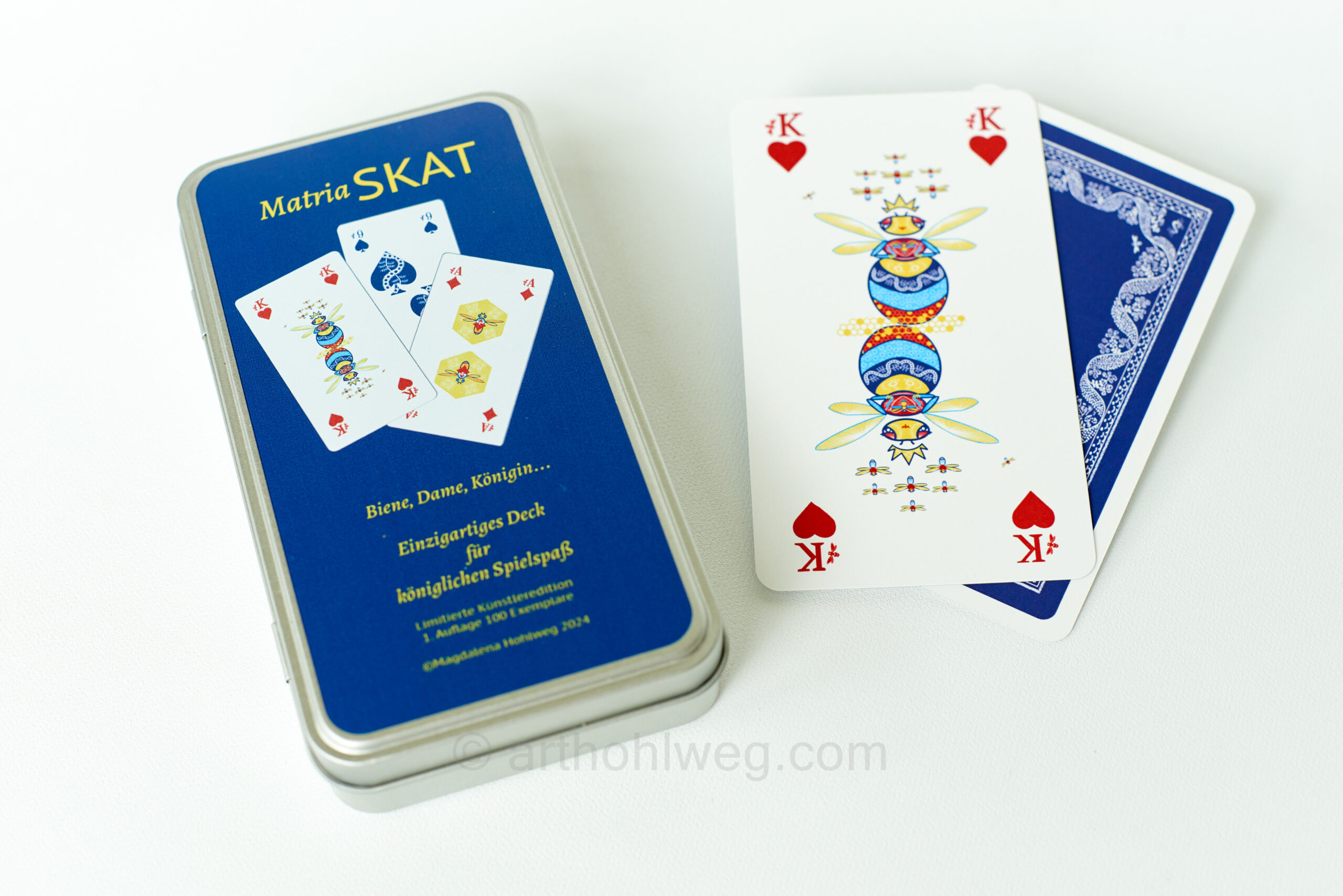
It all began with the traditional Schwalenberg blue-printing technique and the “mitBLAU” exhibition. This initially led to the creation of a single playing card—and eventually to my MatriaSKAT deck of cards.
In this journal entry, I document the journey that led me there: my initial research, my doubts about traditional hierarchies, early beetle-like figures, and the moment when “Jack, Queen, King” finally became “Bee, Queen, Queen.”
The starting point: the “mitBLAU” exhibition
For the “mitBLAU” exhibition, I began to explore traditional Schwalenberg blue-printing in greater depth. I was fascinated by the carved stencils, the regional nature motifs, and the unique effect of the white patterns against a blue background.
However, the more I read about the craft, the more clearly I saw its strict rules and hierarchical structures. The title of master was reserved for men; there was no provision for female journeymen. So I asked myself: How closely must I adhere to a tradition when I engage with it artistically?
I didn’t want to just repeat the old patterns. I wanted to rotate them, flip them, shift them, and connect them to my present.
The First Playing Card
The idea for a playing card came to me quickly. On it, I could immediately turn the familiar order upside down. I transformed the figures in traditional costumes into beetle-like creatures. The red-and-white border was reminiscent of the caution tape that was ubiquitous during the COVID-19 pandemic: exclusionary, confining, garish.
That first card was still cold, unyielding, and somewhat gloomy. But it set something in motion.

But does a piece of indigo-printed fabric have to be blue?
The longer I worked with the blue-and-white figures, the colder their aura seemed to me. For a playable Skat deck, I needed multiple colors anyway, so that the cards would remain easily distinguishable during the game. So I kept searching—for more color, more lightness, and different ambassadors.
Oh, guys. It’s time for something new.
As I looked at the familiar card games, I immediately came across the next outdated hierarchy: Jack, Queen, King. The King leads the royal court—time and again, in almost every deck of cards.
I wanted to change this hierarchy. But would bark beetles, of all things, be the right ambassadors for a positive new perspective? Personally, I have nothing against bark beetles. But for my deck of cards, I was looking for a different vibe.
The Good News: The Queen’s Queen
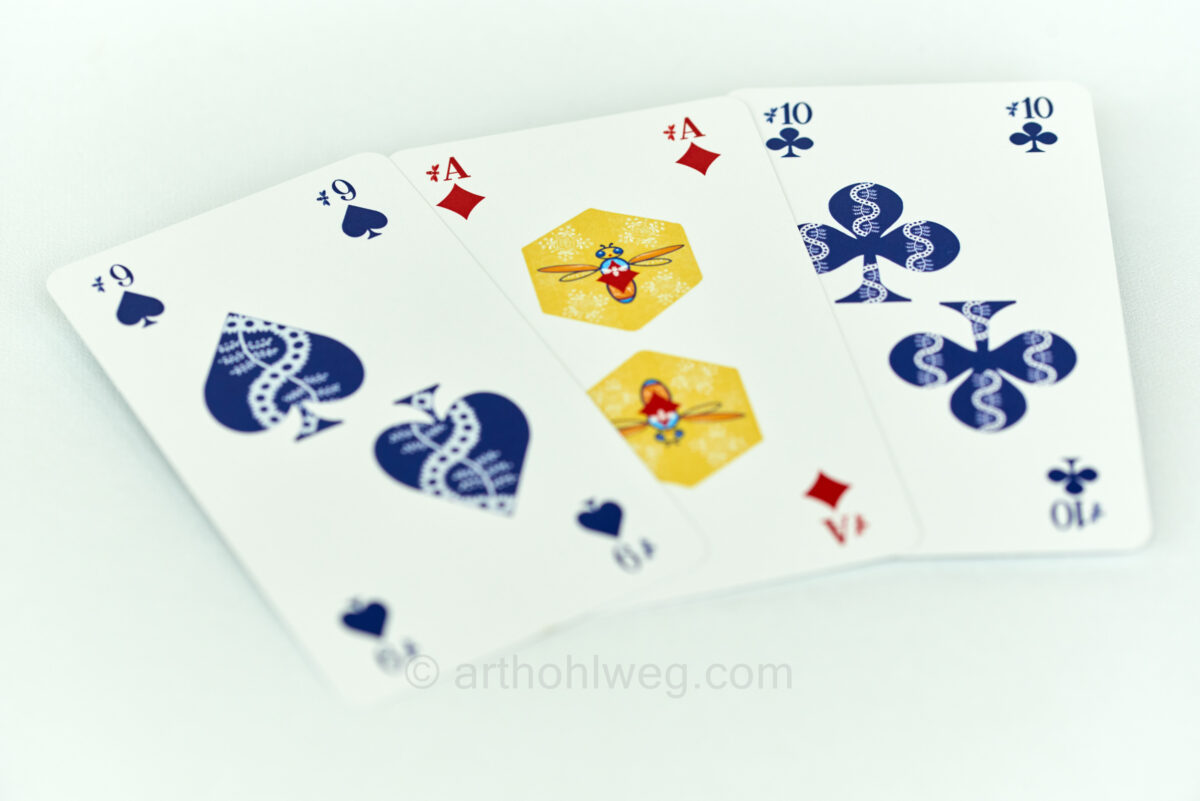
The bees seemed much more optimistic to me. And so things took their course. Little by little, an entire bee colony took shape: The queen bee leads the hive. The honeybee is the queen, the drone is the jack, and the honeycomb is the ace.
The drawings were created on the computer. That didn’t make the work any easier. On the contrary: even the smallest details opened up endless possibilities. Each suit and card value was given its own motif from the traditional Schwalenberg blue-printing tradition. Old patterns with a new look—that was my goal.
One card becomes a whole deck
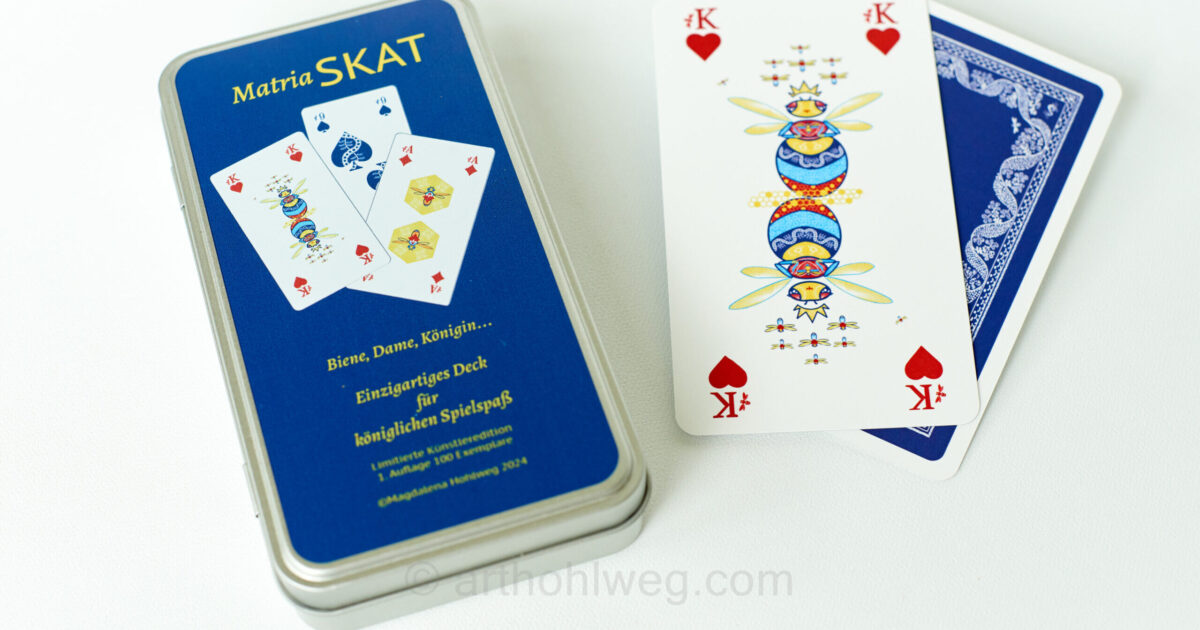
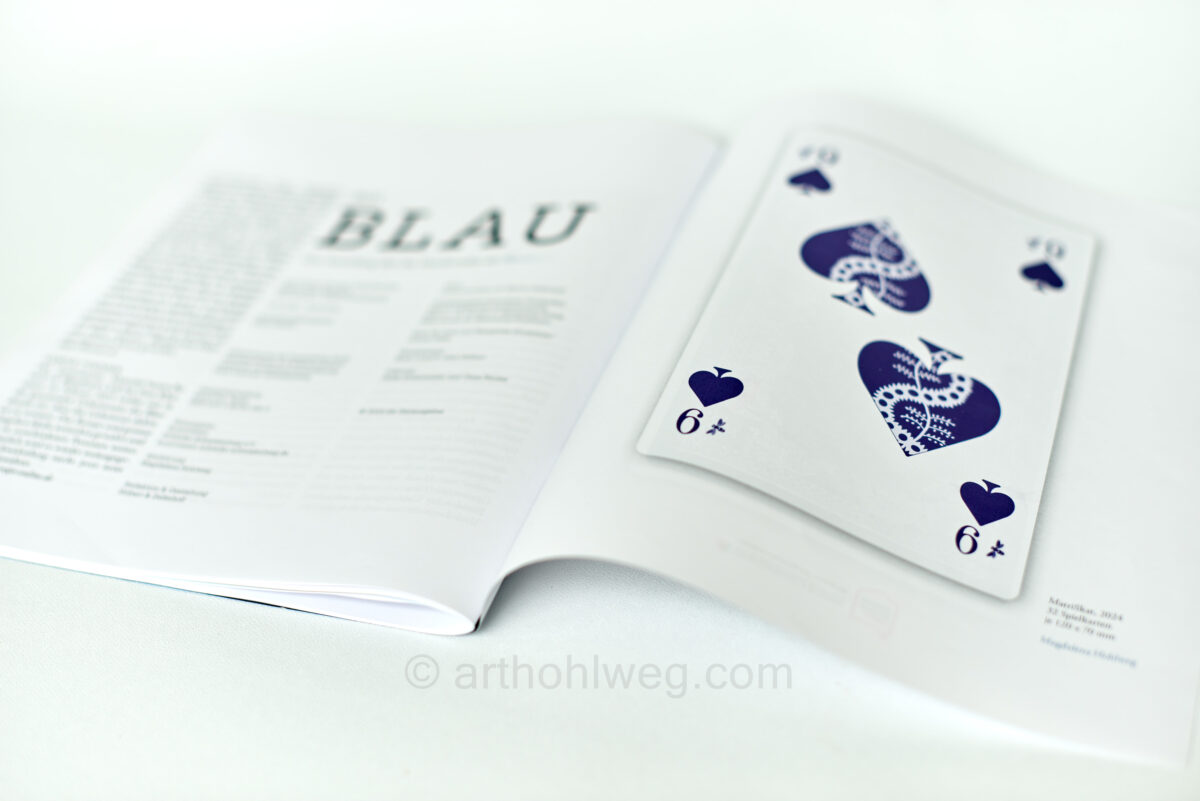
The initial design evolved into a complete 32-card Skat deck. It can be played according to the usual rules, but features a different layout and a new set of illustrations.
MatriaSKAT was featured in the “mitBLAU” exhibition in 2024. The edition is limited to 100 copies. The exhibition catalog documents how the exploration of blue printing evolved into a deck of cards in its own right.
More about MatriaSKAT
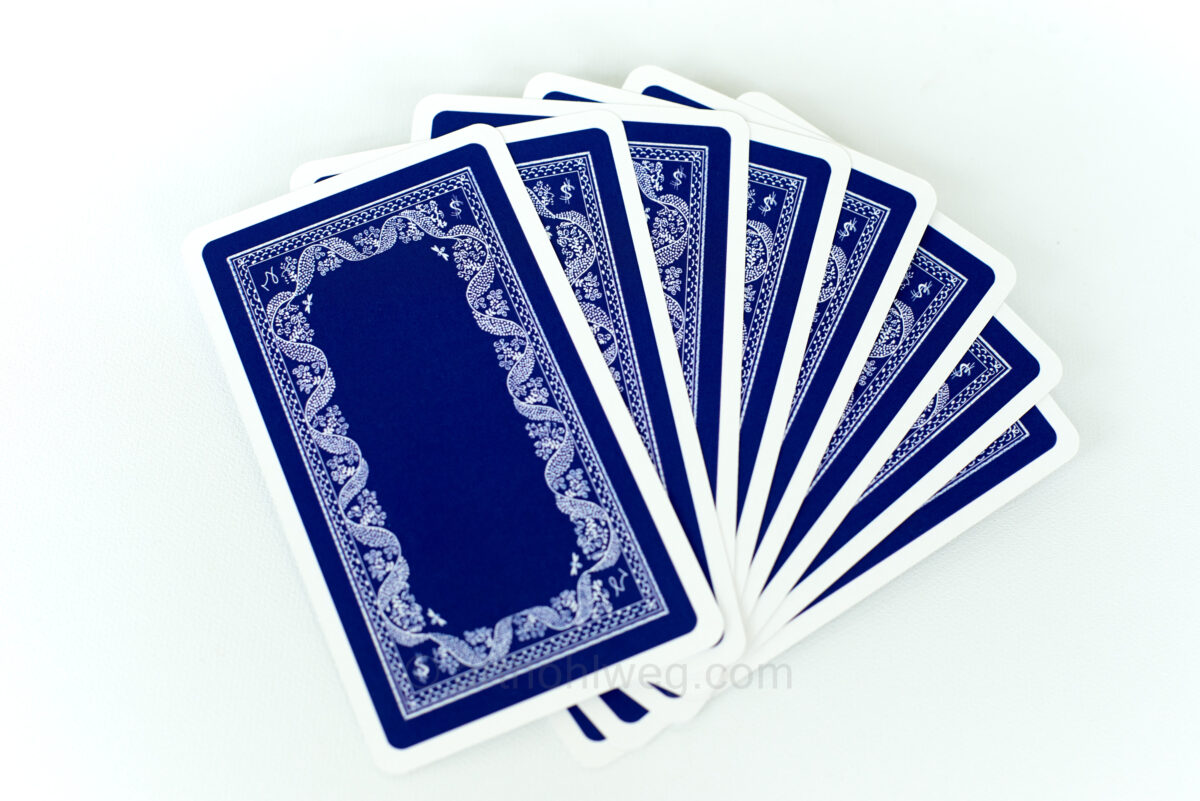
This journal entry documents the personal creative process behind the project. On the project page, I describe MatriaSKAT as an artistic exploration of tradition, nature, and new rules. The editions page showcases the card deck, including the cards, patterns, and the designed box.
View MatriaSKAT as an edition · Visit the “mitBLAU” exhibition · Visit the product page

Leave a Reply