
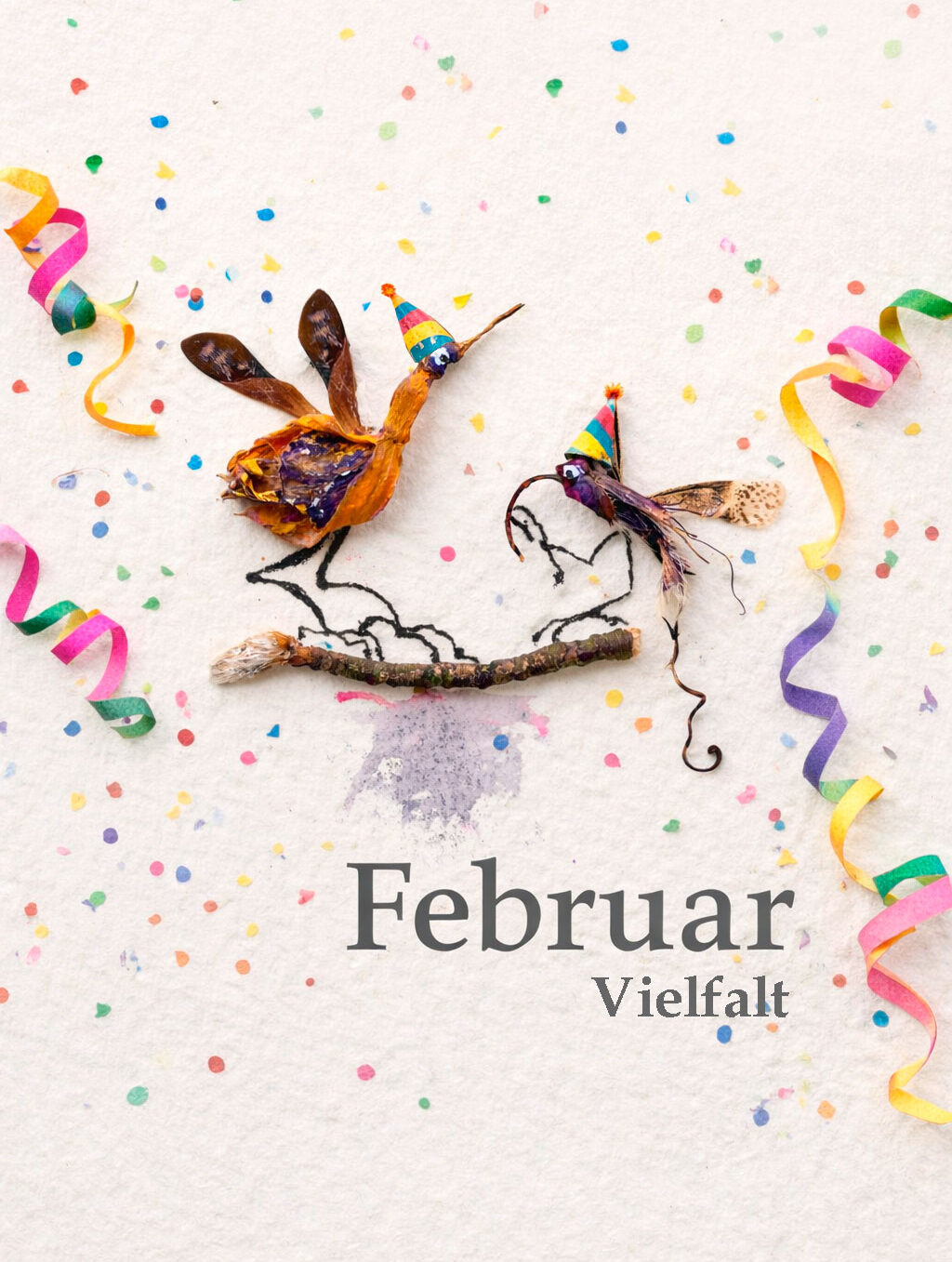
Fool’s freedom for your own perspective
This monthly reflection is part of an annual series of monthly, personal notes at
. You can find the introductory text here: My Journey to Art—and Back to Myself
Admittedly: February can be gray and wet, and in my world of experience, carnival and camels have never been the saving, colorful highlights that brighten everything up. For me, this foolish time has long been more of a colorful horror – unimaginative costumes, smeared make-up and jokes that fizzle out faster than you can say “Helau”. Maybe it was me, the wrong time or the wrong place, or maybe it was the glasses I was looking through at the time. In any case, in the regions of North Rhine-Westphalia where I lived, there was little that really got me excited.
Later, in Hamburg and also in Bad Pyrmont, little changed, because both places are rather carnival-free zones, apart from small, stubborn niches. Those who love carnival will probably experience it very differently, and I don’t want to deny that. Even the question of whether to say “Karneval”, “Fasching” or “Fastnacht” can lead to fundamental discussions surprisingly quickly, and it is well known that there are not only linguistic but almost cultural boundaries between “Helau” and “Alaaf”.
And yet: as soon as there is a celebration, something shifts. Suddenly more seems possible than usual. People dress up, try out roles, exaggerate, distort, play with identities. Pretty or ugly, loud or quiet, elegant or completely out of place – everything is allowed to coexist without having to be immediately categorized.
Fool’s freedom
At this point, I almost inevitably come to art, because it too knows a form of fool’s freedom. Not in the sense of arbitrariness, but as a space in which things can be tried out that would otherwise have no place.
The fact that Cologne and Düsseldorf of all places, two distinct carnival strongholds, are also home to important art academies seems like a remarkable coincidence to me. Do their graduates see themselves as fools? Probably not. They are ambitiously searching for their Holy Grail, hidden deep in the ivory tower of art. A rogue who makes fun of this – Täterätä!
In the end, everything is allowed in art and carnival.
Gray as a stage
If I assign a color to February, then it is grey. Not as a lack of joy and color, but as a surface on which everything can show itself.
Gray holds back, it does not impose itself and does not comment on anything. It allows things to appear without judging them, and that is precisely where its quality lies for me. It’s like a stage that doesn’t want to be the center of attention itself, but makes visible what happens on it.
Just as the most diverse figures can appear side by side in a carnival – witches, clowns, astronauts, drag queens or elephants – art also offers a space in which different points of view can exist simultaneously without having to cancel each other out.
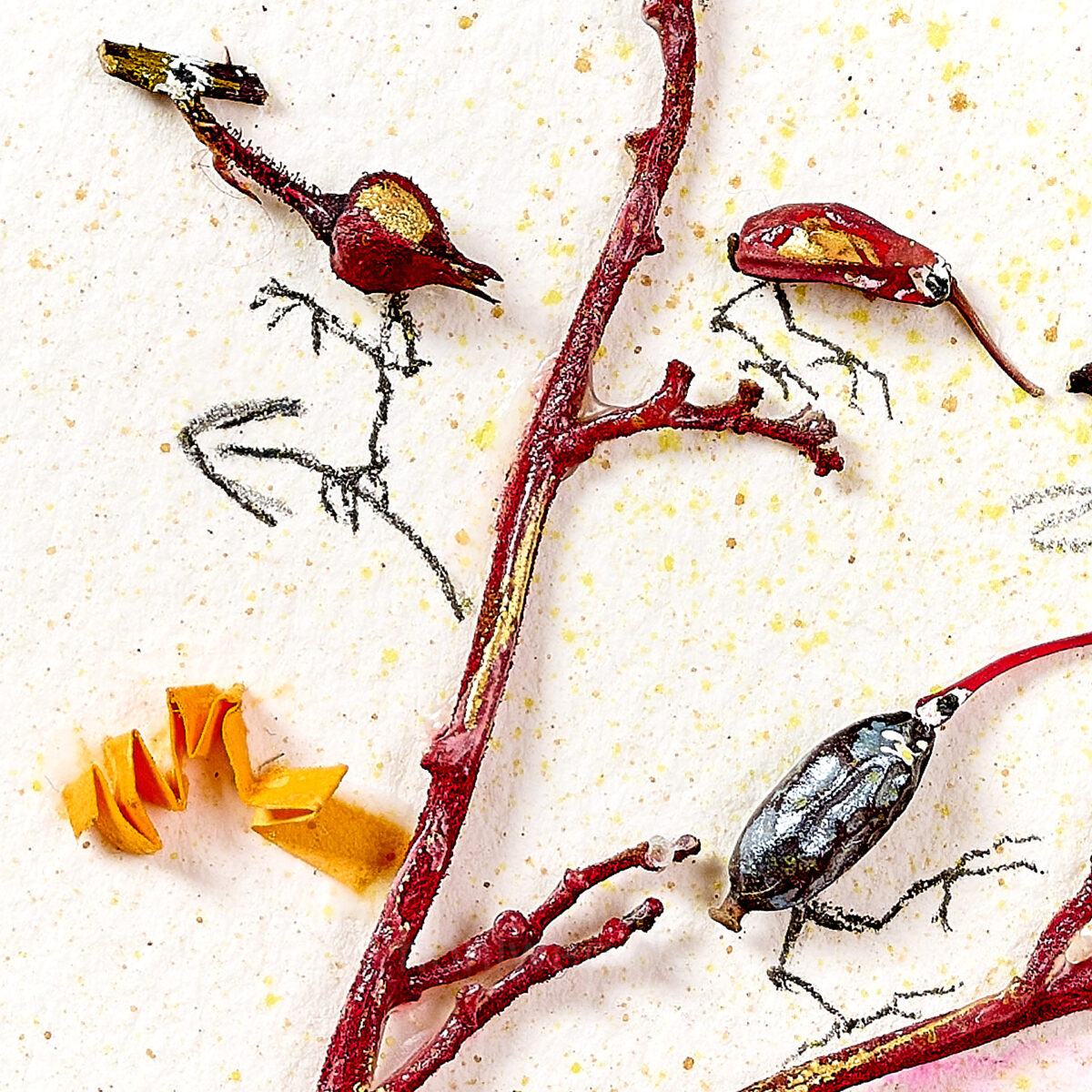
Your own perspective
For me, there is no artistic work without perspective, and by that I don’t mean the question of how spaces can be depicted correctly or whether this “correct” even exists, but rather one’s own view of things, the inner attitude that cannot simply be adopted.
The more I engage with different works, the clearer it becomes to me how many possible points of view there are, and how little sense it makes to search for one valid truth. This diversity can be exhausting because it doesn’t make decisions any easier, but it opens up a space in which I can recognize my own path in the first place.
Art allows me to try out different roles, to put myself in other people’s shoes and at the same time to understand more precisely where I stand myself. It creates encounters without immediately demanding agreement.
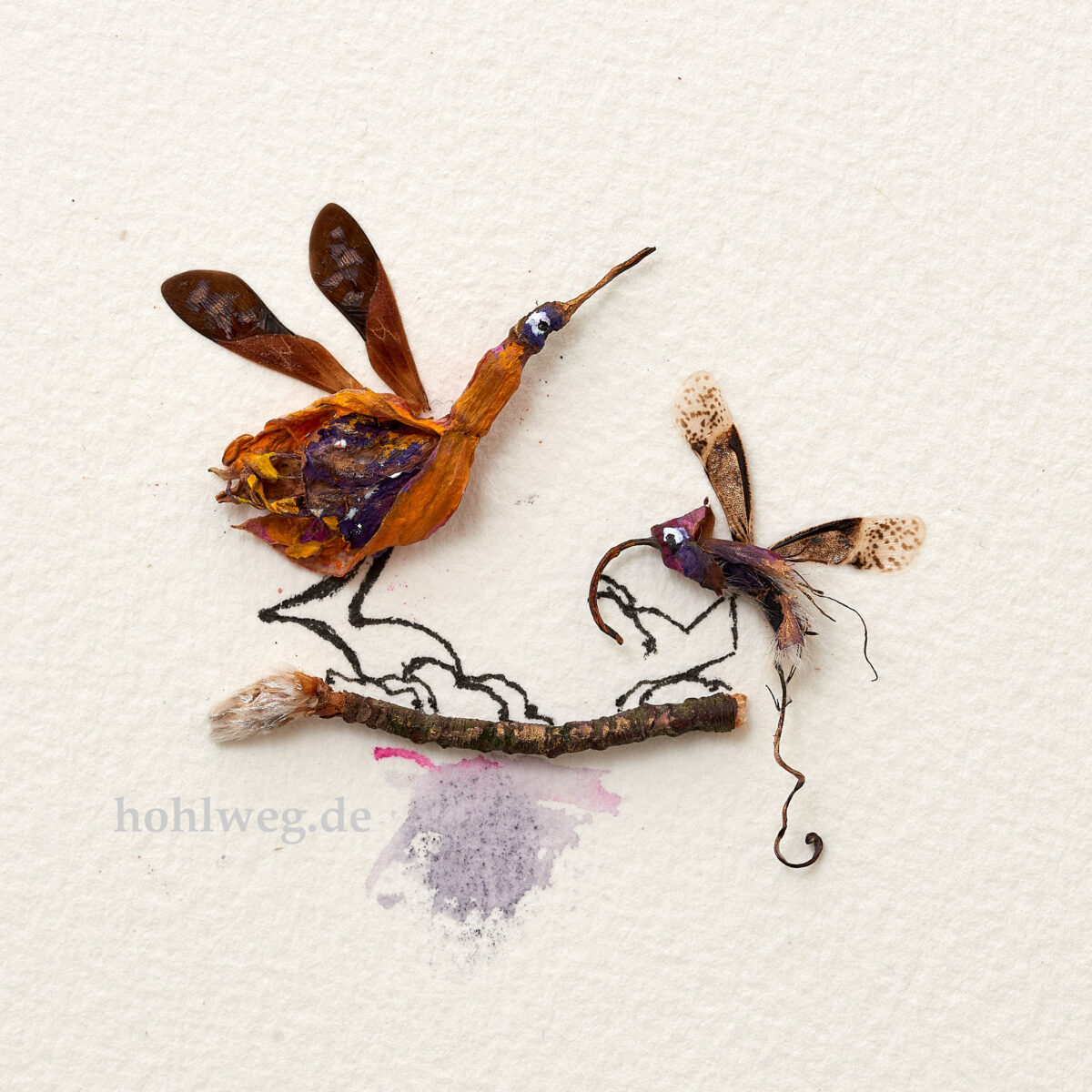
Look around and understand
In my own work, many things only become visible while I am working on them. I don’t find my expression in isolation, but in exchange with what is already there – with other works, other techniques, other times.
I am less interested in comparison in the sense of better or worse, but rather in orientation. I am interested in what questions others ask, what paths they have taken and how their work has developed. Not to adopt something, but to see my own point of view more clearly.
This process cannot be shortened. It takes time, detours and sometimes the experience that something doesn’t work. Or precisely because of this.
If I see art as an opportunity to develop my own language, then the diversity around me becomes a resource. Different perspectives are not mutually exclusive, they broaden the view.
Art as action
For me, art does not stop at thinking. It requires a form of action, a doing that cannot be completely planned.
Whether a work is seen, understood or perhaps goes unnoticed becomes less important if I concentrate on the process. First of all, it is crucial that I take my own point of view seriously and express it, even if it is still changing.
That takes time. And a certain willingness not to know immediately where it will lead.
Start in February
When I look back on February, what remains for me is less a clear result than an attitude. Your own artistic work can help you to find your own perspective, not abruptly, but step by step, sometimes haltingly, sometimes surprisingly clearly.
Exchanging ideas with other works broadens this view further, and with it the possibility of understanding myself better.
Art doesn’t just start in galleries or museums. It begins where I start to get involved. At the kitchen table, among paper, scraps of fabric or found objects. Perhaps on a gray February day.
A little experiment
Sometimes it helps to deliberately irritate your own perspective. I then choose works or artists that initially irritate or even put me off and try to take a closer look. Where does it come from? What is behind it? What decisions were made?
My view often shifts in the process.
Or I go one step further and try out something that is initially unfamiliar to me. A technique that I have never used before, a material that resists, a motif that makes me hesitate for a moment.
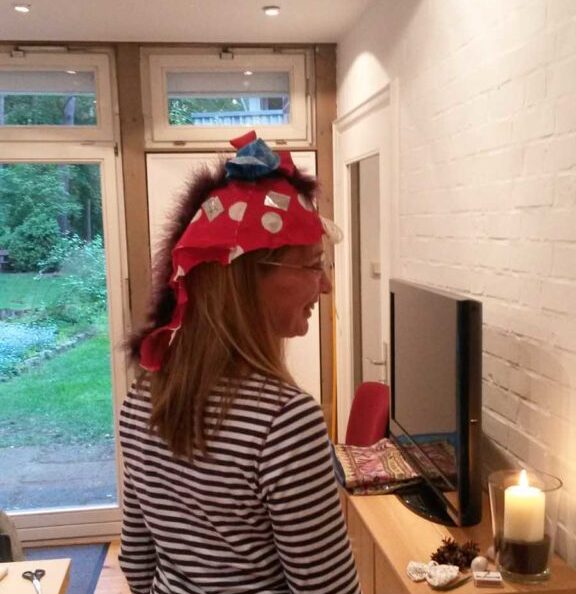
In an art therapy seminar, I once worked with so-called feeling cards. You draw a card without knowing what it says and then artistically express the feeling you have drawn. I drew “embarrassed”.
I sewed myself a completely unsuccessful, ill-fitting cap from scraps of fabric that exactly matched this feeling. It was an imposition for me and I only wore it briefly in the seminar room. I wouldn’t have dared wear it on the street, especially not in Hamburg, which tends to be carnival-free.
And yet this small, unpleasant experience has shifted something.
Maybe that’s the real point:
That I’m prepared to accept what doesn’t fit at first.
And you?
What would you try?
What happens when I give my own perspective space – between found objects, paper and what February has to offer – can be found in a hand-picked selection of my current work here. More or less colorful, pleasing or not: see for yourself what appeals to you.
Art and nature belong together. Here you can find the notes to the
October, November, December, January, March, April
Art is diversity. Everything is allowed.
I wish you color and variety
Magdalena

Leave a Reply