
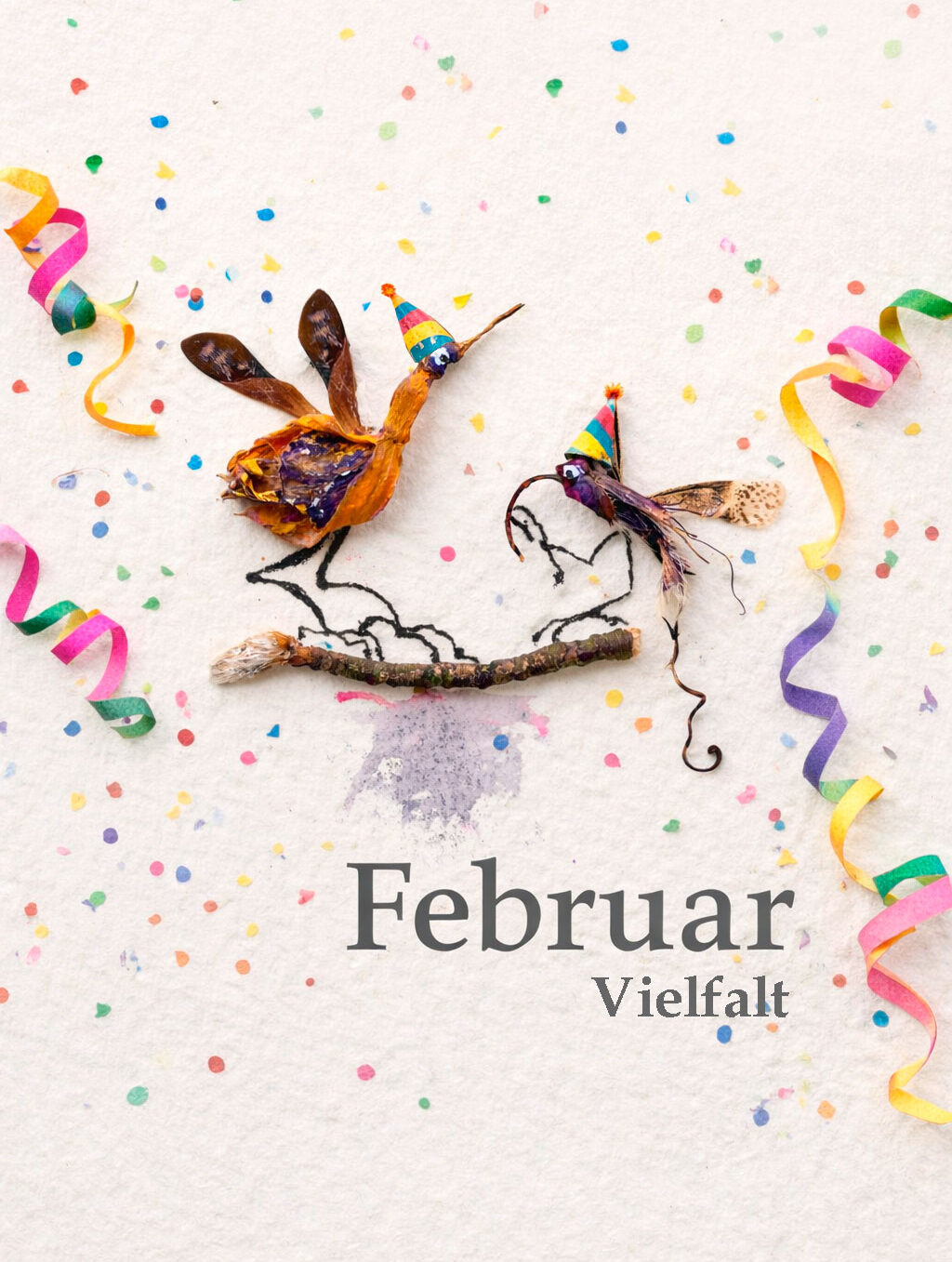
Fool’s freedom for your own perspective
Admittedly: February can be gray and wet. And in my world of experience, carnival and camels were never the saving, colorful highlights. For me, this foolish time was more of a colorful horror – unimaginative costumes, smeared make-up, bland jokes. (Maybe I just had the wrong glasses on in the wrong place at the wrong time). At least in the regions of NRW where I lived.
Hamburg and Bad Pyrmont also tend to be carnival-free zones, apart from a few small niches. Real carnival fans certainly experience it differently. Sorry – for some, “carnival” is already a non-word anyway, so it has to be called “Fasching”. Or Fastnacht? And, as we all know, there can be deep divides between “Helau!” and “Alaaf!
And yet: once the party starts, anything goes. Then anyone and everyone can join in – preferably colorful, bizarre, provocative or cheeky, pretty or ugly. Everyone is welcome.
From fool’s freedom to art
So how do I get from carnival to art? Quite simply: art has the freedom to be a fool.
By the way: Cologne and Düsseldorf – two major art academies, both in designated carnival strongholds. A remarkable coincidence. Do their graduates see themselves as fools? Probably not. They are ambitiously searching for their Holy Grail, hidden deep in the ivory tower of art. A rogue who makes fun of this – Täterätä!
In the end, everything is allowed in art and carnival.
February is gray
And what color do I choose for this month? Gray.
Why? Because grey is the neutral stage for colorful diversity. Anything can appear on gray. Gray does not impose itself – it holds space. It does not comment on anything. It can be done.
Just as witches, clowns, sheikhs, elephants, drag queens and astronauts make fun of the political situation in the world together at carnival, every point of view has a stage, a canvas, in art too.
Perspective instead of perfection
Without perspective, there is no artistic work. I am not referring here to the infinite number of ways to depict spaces correctly – or to prove that this “correct” does not even exist.
I mean our own perspective, our inner attitude. Just as there are countless spatial perspectives, we find thousands and thousands of truths and points of view in art. This is inspiring, if sometimes a little exhausting. In any case, it gives us the space to try out new roles with our creativity, to adopt different points of view.
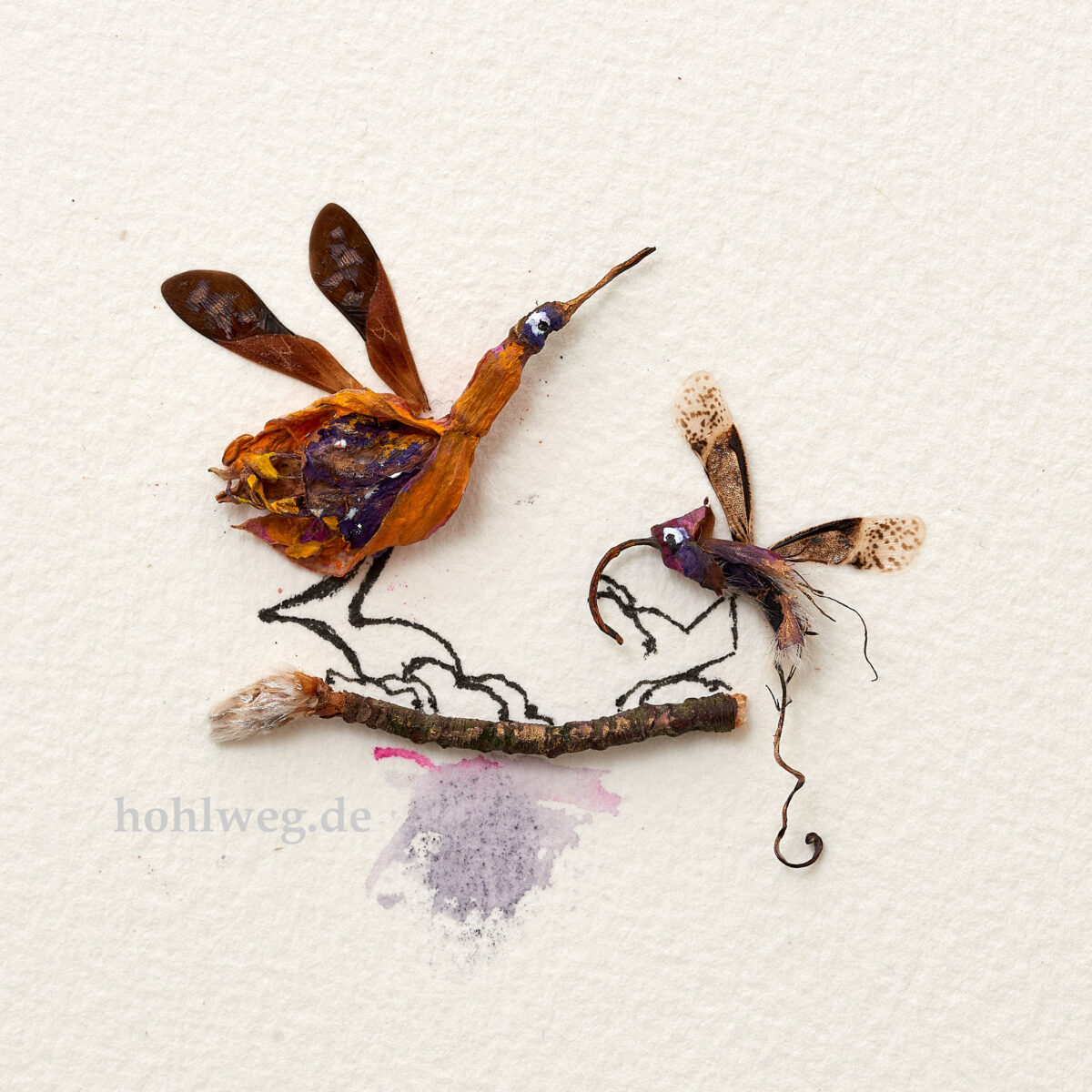
Art opens up spaces for tolerance, encounters and exchange.
Art makes you smart
My own artistic work can become a place where I discover things about myself without specifically looking for them. I don’t find my own style in a vacuum, but by taking an interest in other works and techniques, engaging with different art movements, curiously exploring how art and society are interwoven in different regions and times.
Without any envy of successful artists. Rather with interest: What points of view do they represent? What paths have their developments taken? What can I learn from this – not to copy, but to understand myself better?
Look around. Compare. Get to know each other. And above all: finding your own path. Which unfortunately cannot be shortened. Or fortunately.
If I see art as an opportunity to develop my own language, my own expression, then I can only benefit from the diversity around me. Art is tolerance and acceptance. Art is the opportunity to contribute my point of view.
And art also means acting.
However, whether your own work is widely recognized, raises questions or is perhaps not noticed at all – all of this should be secondary, at least in the beginning. Convincing people of your own position can take time.
Conclusion
Our own artistic work can help us to find our own unique perspective. Usually not overnight – perhaps rather quietly, unagitatedly or haltingly, but in any case, every step on the path to our own creativity is worth taking. By engaging with other works, we also grow – and literally broaden our perspective.
Creativity and art can connect. They open up new possibilities and help us to understand ourselves and others better. To have a say. To act together.
Art does not begin in galleries and museums, but with each and every one of us. Sometimes at the kitchen table. Sometimes in February. In gray.
Fancy a little experiment?
Then why not – this February – choose a work or an artist that you spontaneously find rather difficult. Maybe even a bit gruesome.
Take a closer look. Find out about the career, technique and style. Perhaps you will find interviews or anecdotes, perhaps you will come across historical or cultural contexts. In the end, you will not only have discovered something about the where and why of this art – but in the best case, you will also have a clearer idea of your own point of view.
Or you can embark on your own personal artistic adventure: choose a technique that you have never tried before. New materials, new motifs. Things that make you hesitate for a moment – and then start anyway.
A long time ago, in an art therapy seminar, I learned about an exciting method using so-called emotion cards. You draw a card face down with a feeling: sadness, anger, fear, loneliness …
I drew the card “Embarrassing”.
So my work should stand for something that would be embarrassing for me.
It worked. I sewed myself an incredibly silly, ill-fitting cap from scraps of fabric. A real imposition – at least for me. And that brings us back to carnival: I was so embarrassed by this jester’s cap that I only put it on briefly in the workroom. I certainly wouldn’t have dared wear it on the street in carnival-free Hamburg.
And you? What would you have done?
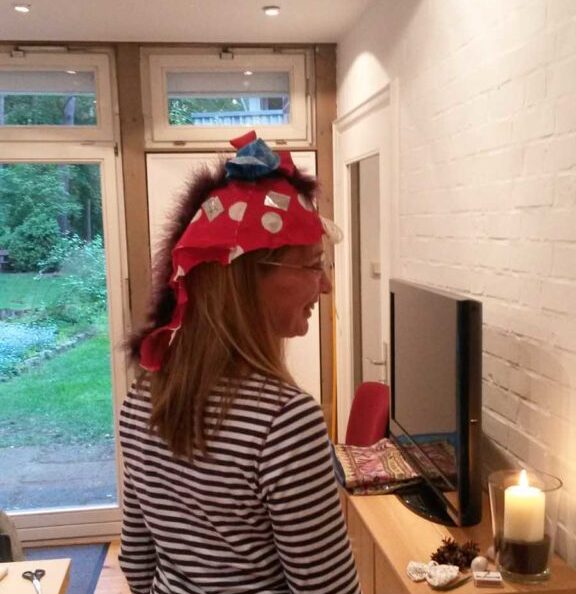
with the embarrassing hat
Art and nature belong together. Here you will find the impulses for
October, November, December, January
Art is diversity. Everything is allowed.
I wish you color and variety
Magdalena

Leave a Reply