
My art is still about the small finds, the subtle wonders along the way.
Today I would like to share a fascinating story with you that has particularly touched me in recent weeks – a true winter story about light, darkness and rebirth – and for me the spark for a new, small series that is about to begin.
🦌A winter myth about deer, birth and the returning light
Because while we are rushing through the stores in our pre-Christmas decorated cities and working through our wish lists, something is happening in our forests that is much older than our Christmas celebrations.
Out there, between old beech trees and creaking spruce trees, nature is experiencing its very own miracle.
💚The doe – graceful forest creature or Christmas roast
This is the story of the doe, the female deer – that graceful forest creature that enchants us with its fine hooves and large, gentle deer eyes. And which is served in many a festive parlor as a roast venison to crown the Christmas menu. But this is not about roe deer recipes, but about a mysterious, true natural phenomenon.
🌿The secret beginning – A conception in the summer light
But let’s start from the beginning: In midsummer, the doe is in her so-called mating season, and mating with the buck takes place during the warm days of July and August. A new fawn is born during these weeks.
But unlike many other animals, the pregnant doe remains magically dormant in the weeks that follow. More precisely, in a dormancy that does not exist in other ungulates. This delays the development of the fawns during the nutrient-poor winter period.
🎄The magical moment of a new beginning – when the light returns
The magical moment of the new beginning only happens in December, when the forest appears particularly dark and forbidding. The sun has now reached its lowest point on the horizon.
💫On December 21, the shortest day and the longest night, we celebrate the winter return of light – the winter solstice.
Until these darkest days, the doe carries the coming life within her like a small light on low flame.
Until then, the germ, tiny and silent, remains in magical dormancy. And then — precisely in these shortest days — the fawn begins to grow.
Not sooner. Not later. No spectacle at all.
No choir sings, no bells ring.
And yet it is an event that has stood for the same thing for thousands of years:
The rebirth of light.
The return of hope.
The rhythm of our earth.
🌿From darkness to new life – preparing for the miracle
The time has come: while we are stacking presents and baking cookies, the doe is preparing for her upcoming summer surprise. Their pregnancy lasts around 9.5 months in total, but the fawn only really grows for the last 4.5 months.
💫A new life awakens with the winter solstice
In May or early June, the doe then looks for a nest of grasses and moss – perhaps at the edge of a clearing.
And there, in the first warm days, she gives birth to her fawn. A tiny creature then lies in the grass, camouflaged like sunspots.
A new adventure takes its course💚
💫The light within us – a Christmas memory
This story is an intense part of my work at the moment. It is the spark from which a new work emerges. I would like to show you a first small impression today:
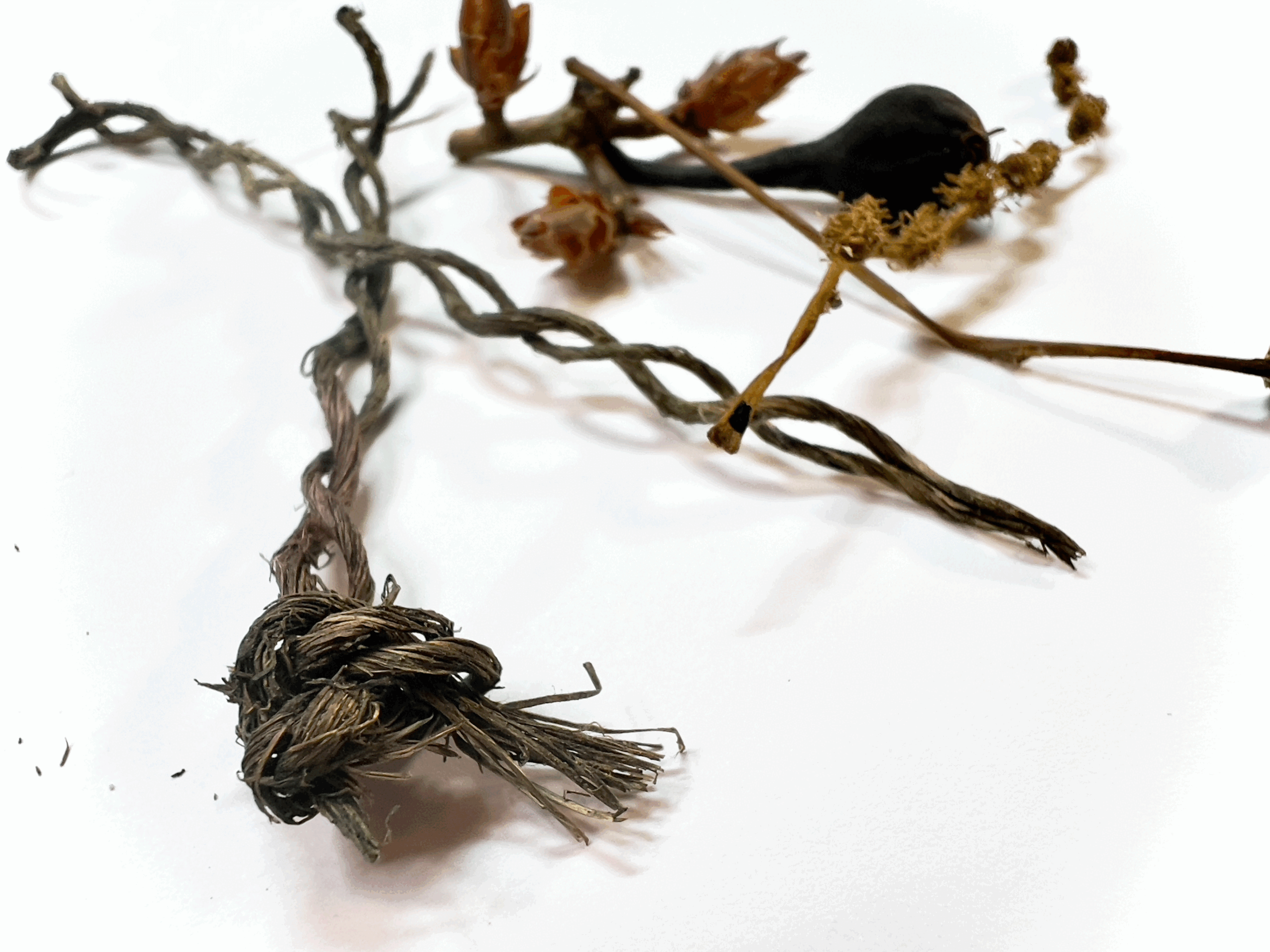
As you can see, you can’t see much yet. But I can assure you: a shy, rare bird is hiding in this thicket. It is still silent and invisible on its spindly little legs. I will coax it out very carefully.
Pssst … the deer-legged forest light bird starts to show itself🐣
I will soon be presenting the finished scene in my newsletter – as part of a small series dedicated entirely to change and the tender hope of a mysterious new beginning.
💫Find out more about December magic here
and how it brings light into the darkness thanks to our creativity💫
At the end of the year, I wish you a peaceful Christmas, quiet moments and a light that accompanies us all into the new year.
All the love
Magdalena

Leave a Reply